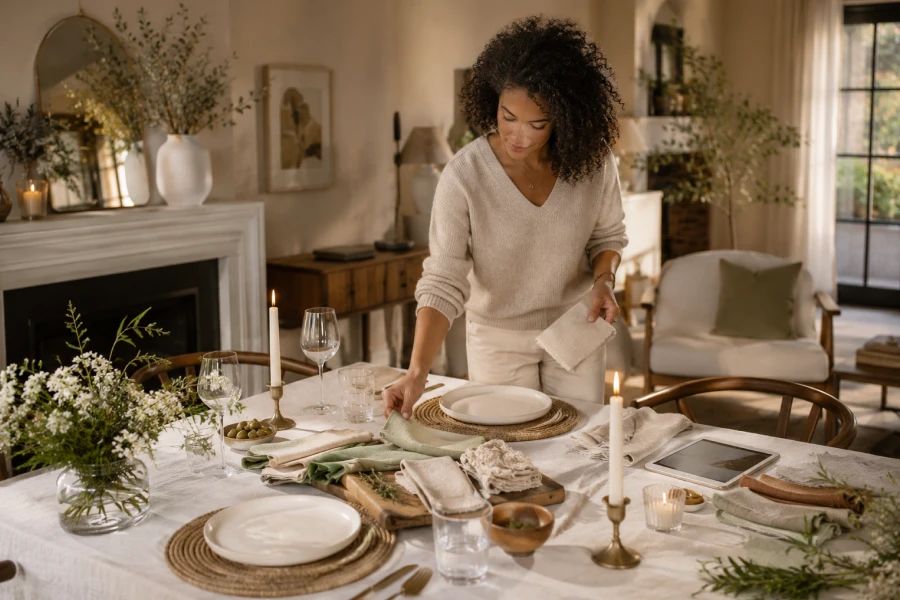
Inspiration is easy to find, but translating it into your own home can be difficult. Dining table decor prompts help turn broad ideas into more realistic styling plans. They encourage you to describe your space, your taste, and your practical needs. Instead of asking for a beautiful table, ask for a table that fits your room. Mention your lighting, furniture, table shape, and existing décor. Then, use seasonal tablescape ideas that match both your mood and your available pieces. This creates results that feel less generic and more useful. A strong prompt gives creativity a clear direction. That is what helps a room finally feel pulled together.
A table rarely exists alone in a room. Its setting influences which colors, materials, and scale will feel right. Describe the walls, chairs, flooring, and nearby furniture before asking for suggestions. Mention whether the room receives warm sunlight or cool artificial light. Include details about surrounding shelves, artwork, or window treatments. These elements shape which styling choices will blend naturally. A dramatic centerpiece may work in one room but feel out of place in another. The more context you provide, the more realistic the recommendations become. This prevents beautiful ideas from feeling disconnected once you try them at home. A cohesive room begins when the table participates in the larger visual story.
Color preferences can change the entire direction of a table setting. Mention your favorite tones, but also include shades you do not enjoy. Describe whether you want the table to blend into the room or create contrast. Ask for a limited palette when you prefer a calm, cohesive look. Request more vibrant options when the space needs energy. Use warm lighting layers in your request when you want color to feel softer and more inviting. Lighting can change how every shade appears at dinner. Consider the season as well. Autumn, winter, spring, and summer all invite different color stories. Specific color direction keeps the result closer to your real taste.
One décor idea is useful, but several options give you more freedom. Ask for a minimal version using what you own. Then, request a medium version with a few additions. Finally, ask for a statement option for holidays or gatherings. This helps you see which details matter most. You may realize that candles and linens are enough for everyday dinners. Or you may discover that a new bowl or vase would make a meaningful difference. Multiple versions also help you choose according to your available time. The same room can support different moods without needing a full redesign. Variety makes styling feel more flexible and less expensive.
Decorating feels more practical when you set clear boundaries before seeking ideas. Mention whether you want to spend nothing, use mostly existing pieces, or buy only a few additions. Ask for a categorized realistic decor shopping list that separates essentials from optional finishing touches. This prevents recommendations from becoming unrealistic. It also helps you prioritize the one or two pieces that could make the biggest difference. Shopping limits encourage better creativity rather than limiting it. You start looking for versatile items instead of disposable trends. A clear budget can make your final table feel more intentional because every addition has a reason to be there.
Dining table styling does not need to wait for a special occasion. Everyday meals can benefit from thoughtful details that take only a few minutes. Ask for ideas using simple plates, a favorite cloth napkin, fruit, and low lighting. Request options that work around homework, busy schedules, or a small dining table. The best ideas will support your routine instead of interrupting it. Choose pieces that are easy to set out and easy to clear away. Let dinner remain comfortable rather than overly formal. Small changes can make weekday meals feel less rushed. That simple shift often encourages people to sit longer and enjoy the meal. Everyday beauty works best when it feels completely usable.
Dining table decor prompts are most helpful when they teach you what details you truly prefer. Save ideas that feel realistic and revisit them before future dinners or gatherings. Notice the colors, textures, and arrangements you keep returning to. Then, build on those choices instead of starting from zero each time. Your confidence will grow as you see patterns in what you enjoy. A well-styled table does not come from copying one perfect image. It comes from making small choices that feel right in your home. Over time, those choices become a recognizable style. That is when inspiration turns into a space that genuinely feels like yours.


Leave a comment