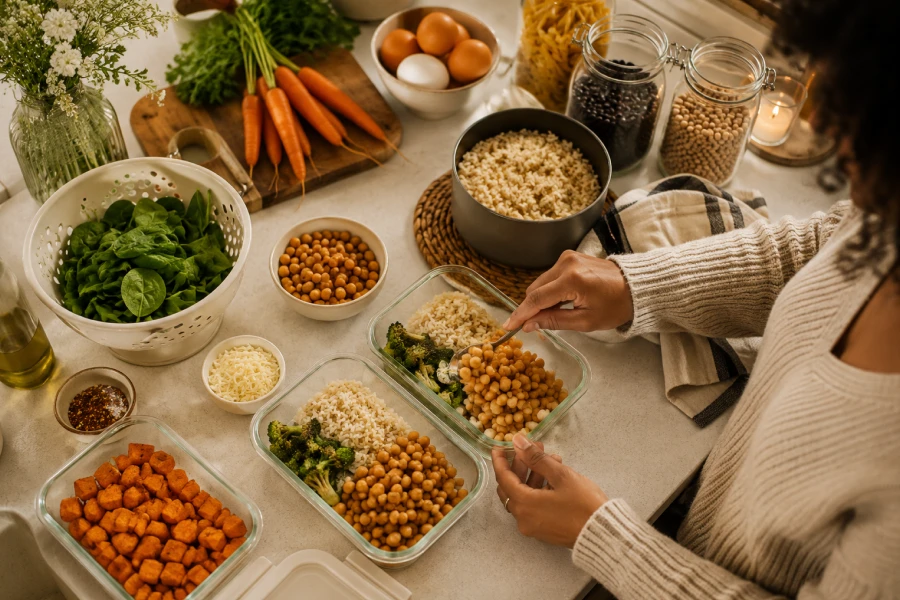
Saving money on groceries does not require eating the same uninspired meal repeatedly. Budget-friendly meal planning works best when it begins with food you actually enjoy. The goal is to stretch ingredients without making dinner feel restrictive. Start by looking at what needs to be used first. Then, choose a few recipes that overlap naturally. A short meal prep routine can make those ingredients easier to use throughout the week. You do not need to prepare every meal in advance. You simply need enough structure to prevent expensive last-minute choices. That balance keeps both your budget and your appetite in a better place.
Flexible ingredients create more meals from fewer purchases. Rice, pasta, potatoes, eggs, beans, oats, and frozen vegetables all earn their place. They work across breakfast, lunch, and dinner without feeling repetitive. A rotisserie chicken can become soup, sandwiches, bowls, and pasta. A batch of roasted vegetables can support several meals. Keep sauces and seasonings varied so the ingredients feel new each time. Tomato sauce, curry paste, salsa, broth, and yogurt can create entirely different directions. Choose items that store well when the week becomes unpredictable. That gives you more freedom without requiring another grocery run. A flexible kitchen is usually a more affordable kitchen.
Food waste often comes from buying ingredients without a clear purpose. Before shopping, check what is already waiting in the refrigerator. Build at least one meal around produce that needs attention soon. Use herbs, greens, and dairy early in the week. Save frozen and shelf-stable items for later days. A few thoughtful grocery budget tips can reduce waste without making planning feel strict. Cook extra grains or proteins for tomorrow’s lunch. Turn tired vegetables into soup, frittata, or roasted trays. This creates value from food you already purchased. Every ingredient used is money that did not disappear into the trash.
Leftovers do not need to feel like the same dinner repeated. Treat them as a foundation for a new meal. Roasted vegetables can become tacos, bowls, or a simple pasta sauce. Leftover chicken can work in soup, quesadillas, or fried rice. Grains can turn into breakfast bowls with eggs and fruit. Keep sauces, herbs, and toppings on hand for easy variation. A small change in flavor can make familiar food feel entirely different. Store leftovers in clear containers so they remain visible. Plan one night each week for a leftover dinner. That makes use of food feel intentional rather than accidental.
Shopping with a rhythm keeps spending more consistent. Choose one main grocery trip, then use smaller stops only when necessary. Review your meals before heading out. Write a list that includes quantities, not just ingredient names. Organize your list by produce, pantry, refrigerated items, and household basics. This helps you move through the store without doubling back. More efficient supermarket trips often lead to fewer impulse purchases. Compare prices only when it helps your actual plan. A steady routine makes grocery spending easier to understand. It also makes cooking feel less chaotic once the week starts.
Affordable meals should still feel satisfying and personal. Comfort food is often naturally budget-friendly when built around simple ingredients. Beans, potatoes, pasta, rice, eggs, and seasonal produce can all create memorable dinners. Add one special element to keep the meal feeling generous. A good topping, fresh herb, or favorite sauce can change the experience. Think about texture as well as cost. Something creamy, crisp, fresh, or warm helps a simple meal feel complete. Home cooking does not need expensive ingredients to feel abundant. It needs care, seasoning, and a bit of imagination. Those elements cost very little but make a real difference.
Budget-friendly meal planning should fit the pace of your home, not an idealized routine. Choose meals that match the time and energy you usually have. Keep one or two ultra-simple dinners ready for difficult days. Let leftovers cover another night when work runs late. Make a note of meals that everyone enjoys and would eat again. Over time, that list becomes your most useful planning tool. You will spend less time searching for ideas and more time using what works. Savings become easier because your kitchen feels organized. The result is not a perfect meal plan. It is a more confident, flexible way to feed yourself well.



Leave a comment